Trying to choose between a waterfront home and an in-town cottage in Glen Arbor? That decision can feel simple at first, until you realize these two property types offer very different day-to-day experiences in one of Northern Michigan’s most seasonal markets. If you are weighing views and shoreline access against walkability and village convenience, this guide will help you compare what really matters so you can narrow in on the right fit for your lifestyle. Let’s dive in.
Why Glen Arbor Feels Different
Glen Arbor is not a typical small-town housing market. According to Glen Arbor Township, the township has about 900 year-round residents, around 5,000 seasonal residents, and more than 1 million visitors each year.
That seasonal rhythm shapes how buyers look at property here. With forests, dunes, rivers, inland lakes, streams, islands, and Lake Michigan all tied into the local setting, many purchases are as much about lifestyle as they are about square footage or bedroom count.
The area’s connection to Sleeping Bear Dunes National Lakeshore adds another layer. The National Park Service highlights miles of sand beach, bluffs rising 450 feet above Lake Michigan, and major nearby attractions like Glen Haven, the Dune Climb, and the Sleeping Bear Heritage Trail.
Waterfront vs In-Town at a Glance
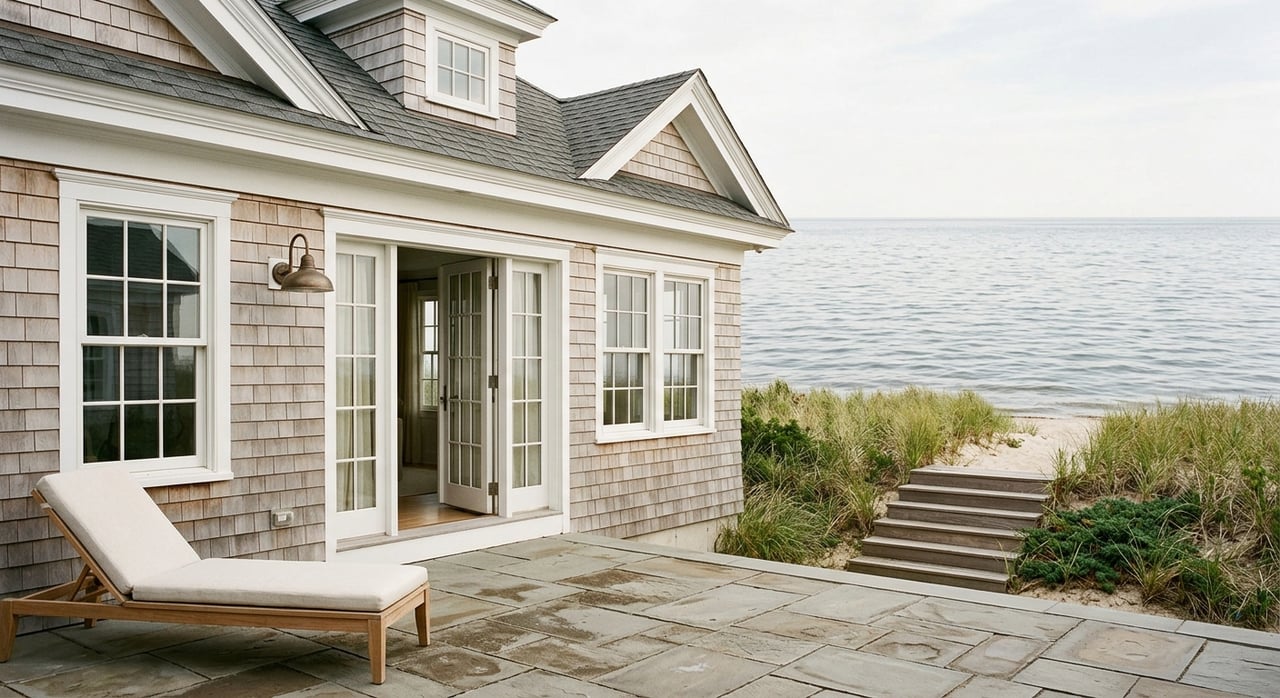
At a high level, waterfront homes and in-town cottages serve different priorities. Waterfront properties tend to center on direct access, views, site quality, and privacy. In-town cottages usually appeal to buyers who want easier access to shops, dining, parks, and trail connections.
The key is that Glen Arbor is compact enough for those lines to blur a bit. Some in-town locations still offer wooded settings, easy beach access, and a quieter feel than buyers might expect.
What Prices Look Like in Glen Arbor
One of the biggest mistakes buyers can make is assuming there is one clear Glen Arbor price point. The data shows a much more varied picture because inventory is limited and the mix of homes is uneven.
As of February 28, 2026, Zillow reported an average Glen Arbor home value of $594,784. At the same time, Realtor.com’s Leelanau County data showed a county median home sale price of $771,950 and a Glen Arbor median home price of $1.2M.
That spread matters because a resort-style unit with shared beach frontage, a buildable in-town lot, and a legacy lakefront property are not interchangeable products. They may all fall under the Glen Arbor umbrella, but they serve very different goals.
Waterfront Price Range
Current waterfront inventory appears very limited. Redfin’s waterfront page showed 4 waterfront homes for sale, with a median listing price of $798K.
That category spans a wide range. Current examples cited in the market include a $395K Lake Street resort-style unit with private beach frontage and shared amenities, a $1.999M waterfront home, a $2.795M Big Glen Lake property with 150 feet of sandy beach, and a $5.5M luxury estate.
In-Town Cottage Price Range
In-town properties also cover a broad spectrum. Current Glen Arbor listings have included a $79.9K lot, a $145K buildable lot, a $650K one-bedroom downtown cottage, an $850K downtown cottage, and an $885K wooded Woodstone cottage.
For buyers, that means the in-town category can include entry-level land opportunities, smaller turnkey homes, and higher-end cottages near the village core. The price gap with waterfront is real, but it is not a simple apples-to-apples premium.
When Waterfront Makes More Sense
If your goal is to center your time in Glen Arbor around the water itself, waterfront ownership may be the stronger match. Direct frontage, private views, and the feel of a more separate setting are often the main reasons buyers stretch for shoreline property.
Some current listings show exactly why waterfront commands attention. One Lake Michigan property marketed on Realtor.com features 111 feet of frontage on a 1.63-acre wooded lot with a gradual slope to the water, while a Big Glen Lake example highlights 150 feet of sandy beach and more than 200 feet of depth.
If those features are what you picture when you think about Glen Arbor, an in-town property may not deliver the same experience. Waterfront often wins when your top priorities are:
- Direct shoreline access
- Wider water views
- Greater separation from village activity
- Legacy-property appeal
- A stronger sense of privacy and retreat
For second-home buyers especially, that lifestyle pull can outweigh the tradeoff of being a little less connected to the village core.
When an In-Town Cottage Fits Better
If you want a simpler everyday routine, an in-town cottage may be the better choice. Glen Arbor’s village core is compact, active, and easy to enjoy without making every outing a drive.
According to Glen Arbor Township’s community information, the village offers public restrooms and visitor information on Lake Street, a township park at State Street and M-22 with playgrounds, courts, pavilions, and a water station, a boat launch at the end of Lake Street, and a weekly farmers market behind Town Hall from June through September.
That kind of setup supports a very different ownership experience than a more secluded shoreline parcel. You may be able to walk or bike into town, stop by the park, launch a boat, or head to seasonal events with less planning.
Walkability and Trail Access
One of the biggest advantages of in-town ownership is access to the local trail network. The Sleeping Bear Heritage Trail has Glen Arbor access and trail parking, and the National Park Service notes that it is the only bicycle trail in Sleeping Bear Dunes National Lakeshore.
One popular route is the 4.3-mile segment between the Dune Climb and Glen Arbor. If you picture your time here including bike rides, walks into town, and quick access to village amenities, that can be a major point in favor of a cottage near the center of Glen Arbor.
Privacy Is Not Only for Waterfront Homes
Some buyers assume in-town always means busy or closely packed. In Glen Arbor, that is not always the case.
For example, a Woodstone cottage highlighted on Zillow is described as being on a wooded cul-de-sac in downtown Glen Arbor, with a small number of neighboring homes and walkable access to the town park, Lake Michigan, Glen Lake, shops, restaurants, and galleries.
That is a good reminder that some in-town neighborhoods can offer a middle ground. You may still get convenience and walkability while keeping a more tucked-away setting.
The Real Tradeoff: Shoreline or Routine
For most buyers, the choice is less about price alone and more about how you want to spend your time. Waterfront homes usually deliver the strongest shoreline identity. In-town cottages usually make the daily routine easier.
If your ideal Glen Arbor day starts with coffee by the water and ends with direct beach access outside your door, waterfront may be worth the premium. If your ideal day includes walking into town, hopping on the trail, visiting the park, and keeping maintenance and logistics simpler, an in-town cottage may feel more practical.
Because Glen Arbor is small and amenity-rich, the decision often comes down to which tradeoff feels more natural to you:
- Choose waterfront if direct frontage, views, and separation matter most.
- Choose in-town if walkability, convenience, and easier access to village life matter most.
- Look closely at specific neighborhoods if you want a blend of privacy and proximity.
What to Know About Rentals
Many buyers also ask whether one category works better as a rental. The answer depends on the property, the parcel, and the governing rules.
Glen Arbor Township’s zoning ordinance allows a single-family dwelling in Residential I to be used as a lease or rental, and the Resort District explicitly permits rental cottages along with inns, lodges, hotels, and rooming houses.
That said, you should not assume every property is ready for income use just because rental activity exists in the market. Buyers should verify parcel-specific zoning, HOA rules, and any operational requirements before basing a purchase decision on rental potential.
Seasonality also matters. The township’s visitor profile points to strong seasonal demand, while Realtor.com’s broader Leelanau County market page was noted as showing only 3 rental listings in the traditional rental pool. In practice, Glen Arbor rental appeal is highly location-sensitive and shaped by the tourism calendar.
Maintenance Can Differ by Property Type
Maintenance and due diligence are another important part of this decision. Some shoreline properties rely on private well and septic systems, which can add another layer to ownership planning.
Glen Arbor requires a well and septic inspection at the time of sale. The ordinance says the evaluation considers whether the system is working properly and whether it is properly separated from surface waters or wetlands.
That does not mean in-town properties are always simpler, but it does mean buyers should pay close attention to utility setup, property systems, and long-term maintenance expectations. This is especially important if you are comparing a lower-maintenance cottage or resort-style unit with a more independent waterfront property.
How to Choose the Right Fit
If you are still deciding between Glen Arbor waterfront and an in-town cottage, start by thinking less about labels and more about lifestyle. Your best option is the one that fits how you actually want to use the property, not just how it looks in photos.
A few questions can help clarify your direction:
- Do you want to walk to village amenities often?
- Is direct frontage a must-have, or would nearby access work?
- How important are privacy and lot size?
- Would you prefer a simpler lock-and-leave setup?
- Are you considering rental use, and have you confirmed the rules?
In a market as seasonal and limited as Glen Arbor, the right property is often the one that matches your priorities early, before you start comparing very different homes as if they serve the same purpose.
If you want help weighing waterfront lifestyle against in-town convenience in Glen Arbor or anywhere in Leelanau County, Jennifer Gaston offers local, high-touch guidance to help you compare options with clarity and confidence.
FAQs
What is the main difference between Glen Arbor waterfront homes and in-town cottages?
- Waterfront homes usually offer direct shoreline access, views, and more separation, while in-town cottages usually offer better walkability and easier access to the village core.
What price range should you expect for Glen Arbor waterfront property?
- Recent examples ranged from about $395K for a resort-style unit with shared amenities to several million dollars for larger lakefront and luxury properties.
What price range should you expect for Glen Arbor in-town cottages?
- Recent examples ranged from lots under $150K to cottages from roughly $650K to $885K, depending on location, size, and condition.
Is Glen Arbor a good market for seasonal or second-home buyers?
- Glen Arbor is strongly shaped by seasonal demand, with about 5,000 seasonal residents and more than 1 million visitors each year, so many buyers purchase based on lifestyle use as much as housing needs.
Can you use a Glen Arbor home as a rental property?
- Rental use is part of the local zoning framework in certain contexts, but you should verify parcel-specific zoning, HOA restrictions, and operating requirements before assuming income potential.
Do Glen Arbor waterfront homes often have private well and septic systems?
- Some do, and Glen Arbor requires a well and septic inspection at the time of sale, so buyers should review those systems carefully during due diligence.