Thinking about a downtown Traverse City condo but not sure how to weigh views, HOA fees, or days on market? You are not alone. Buying downtown is different from buying a single-family home, and the details can impact both your monthly costs and your long-term value. In this guide, you will learn how the market is structured, what to review in HOA documents, how timing affects negotiations, and a simple way to value a unit. Let’s dive in.
Traverse City downtown market structure
Downtown Traverse City offers a mix of building types, from small walk-up conversions to mid-rise mixed-use buildings and newer luxury projects with water or bay views. Unit size, view, parking, and building services are the primary price drivers. Seasonal patterns matter too, with more listings in spring and summer and elevated buyer demand through early fall.
Three inventory tiers to know
Entry / Urban-compact
- Typical units: studios and 1-bedrooms in older mid-block buildings, often with limited or off-site parking and modest finishes.
- Who it fits: first-time buyers, downsizers, and anyone who values walkability and convenience over square footage.
- Market behavior: highest turnover and often the most approachable prices for a downtown address.
Mid-tier / Owner-occupied
- Typical units: 1–2 bedrooms with modern updates, assigned parking or garage spaces, storage, and in-building laundry. Some may offer limited water or harbor views.
- Who it fits: buyers seeking a primary residence with space, convenience, and a walkable lifestyle.
- Market behavior: steady demand, especially for well-maintained, updated units that are priced for the season.
Premium / View or New Construction
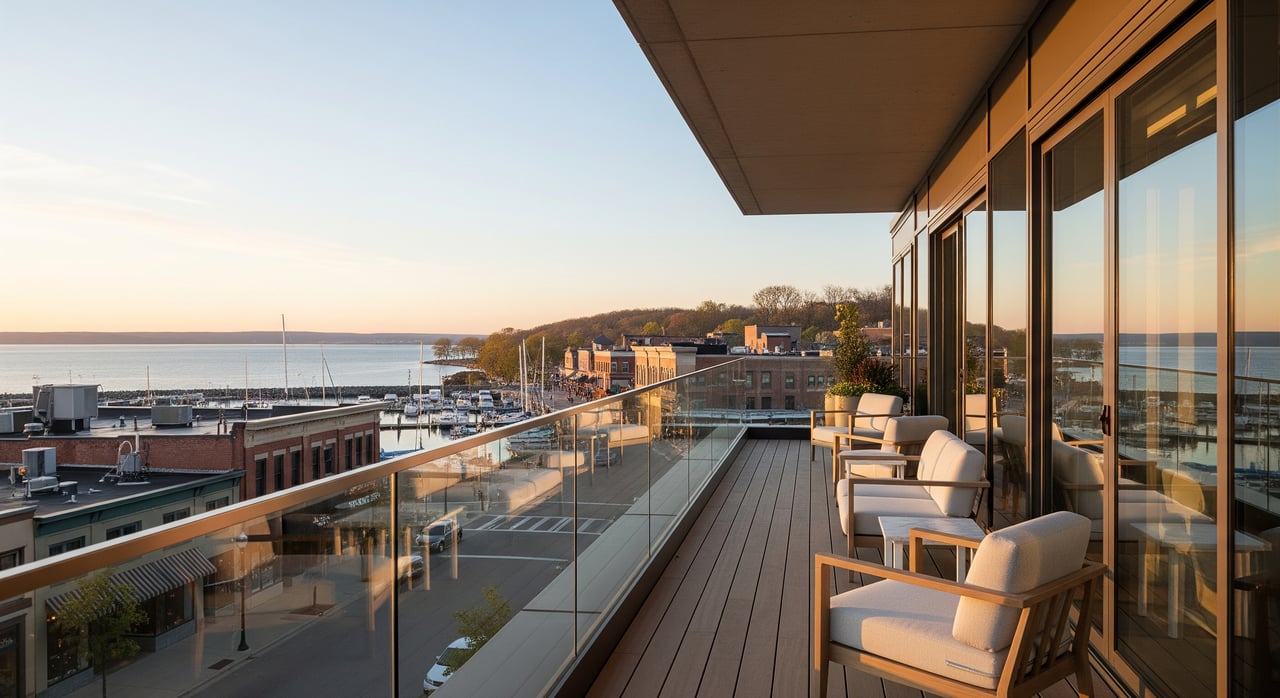
- Typical units: larger floor plans, high-end finishes, balconies with bay or lake views, deeded garage parking, and amenities like elevators, secure entry, or concierge services.
- Who it fits: second-home buyers, empty-nesters, and anyone prioritizing views and turnkey finishes.
- Market behavior: lower volume and longer timelines; pricing is more sensitive to view angle, exposure, floor level, and finish quality.
Tip: Ask your agent for recent stats on active listings, months of supply, and median price per square foot for downtown condos. These figures help you see how each tier is performing relative to Grand Traverse County single-family homes.
HOA documents and what they reveal
Monthly HOA fees and association health directly affect affordability, loan approvals, and resale value. Before you write an offer, plan to review the full HOA packet and understand what your monthly dues actually cover.
Must-have HOA documents
Request these items before or with your offer:
- Declaration (master deed), bylaws, and articles of incorporation
- Recent meeting minutes for the last 12–24 months
- Current budget and most recent financial statements
- Reserve study and evidence of reserve funding, if available
- Current HOA fee schedule and a list of what is covered (exterior maintenance, utilities, insurance, snow removal, trash, lawn care, elevator, clubhouse, etc.)
- Insurance summary showing master/blanket policy coverage and owner responsibilities
- Rules and regulations, including pet and rental policies and any short-term rental rules
- Pending litigation or claims involving the association
- Special assessment history for the past 5–10 years
- Owner-occupancy and rental mix
- Estoppel certificate or payoff statement indicating fee status and pending assessments
Key risk factors to watch
- Underfunded reserves with a pattern of special assessments
- High delinquency rates or active litigation that could impact lending or dues
- Restrictive or unclear rental rules that limit flexibility for investment or seasonal use
- Insurance gaps that push more cost or risk to the unit owner
- Management model problems, especially if self-managed without strong oversight
A higher fee is not automatically a negative. What the fee includes is just as important as the dollar amount. Strong reserves, building maintenance, and included utilities can justify higher dues, while low fees with weak reserves can be a red flag for future assessments.
Financing and condo approvals
Some lenders require a project-level review of the condo association. Conventional loans may proceed with a standard review, but FHA and VA often need separate project approvals. If owner-occupancy ratios are low, commercial space is high, or the association has litigation or thin reserves, financing can be limited.
What to do next:
- Talk to your lender early about any project-level review requirements.
- Confirm whether the building holds FHA or VA approval if you plan to use those programs.
- Build time into your offer for lender review of condo documents.
Timing, days on market, and leverage
Seasonality and financing needs shape how long a unit sits on the market and how much leverage you have at the negotiation table.
Typical contract-to-close timelines
- Cash buyers: around 7–21 days, assuming clean HOA and title items.
- Conventional, VA, or FHA financing: about 30–45 days in typical cases.
- If the lender needs a project review: add roughly 1–6 weeks based on complexity and responsiveness.
- Luxury or unique floor plans: often 60–120+ days on market unless pricing is highly competitive.
Seasonal dynamics in Traverse City
Spring and summer bring more listings and more buyers, which compresses days on market for entry-level and mid-tier units. Premium view units can be more variable. Late fall and winter often see fewer listings, but you may have extra leverage with motivated sellers.
Negotiation levers that work
- Price and comps: align offers with recent comps and price per square foot for similar floor levels and views.
- HOA health: thin reserves or recent assessments can justify price reductions, seller credits, or escrow holdbacks.
- Inspection findings: even in condos, unit-level systems matter. Findings can reveal broader association issues and open the door to credits or repairs.
- Contingencies and speed: shorter inspection or financing timelines can strengthen your offer.
- Financing risk: conventional or cash is often viewed as more reliable than loans sensitive to project approval.
- Appraisal gap: in rising segments, sellers may ask for appraisal-gap language. Evaluate your comfort with any additional cash risk.
Common outcomes include seller credits to cover association repairs or appraisal shortfalls, prepaid HOA dues for a set period, and escrowed funds for items documented in meeting minutes.
Valuing a unit: a simple comps method
Condos value differently than single-family homes. Floor level, view angle, parking, and finishes carry outsized weight. Use a structured approach to avoid overpaying.
Step-by-step comps template
- Pull sales from the last 3–6 months in the downtown submarket. Extend to 12 months if volume is thin.
- Prioritize comps in this order:
- Same building and floor when possible
- Same building, different floor with careful view and level adjustments
- Nearby buildings of similar age, finishes, and parking
- Adjust comp prices by percentage for key differences:
- Water or bay view: about +10% to +25% depending on prominence
- Floor level, top vs. street: about +5% to +15%
- Assigned garage parking vs. none: about +5% to +10%
- Significant updates and finishes: about +5% to +15%
- Size differences: use price-per-square-foot adjustments
- Use at least three comps to triangulate a realistic value range.
Example adjustments:
- A 2-bedroom, 900-square-foot unit that sold for a set price could justify about +10% for a similar unit with a stronger water-facing view, or about −7% for a lower-floor interior unit without assigned parking.
Downtown condo vs. peninsula or lakeshore living
Both options are compelling in Grand Traverse County. It comes down to your priorities and lifestyle.
Decision framework to compare options
Rank these from most to least important:
- Walkability and proximity to restaurants and shops
- Views and proximity to open water
- Square footage and outdoor space
- Parking and storage needs
- Maintenance tolerance and time commitment
- Rental or short-term rental intentions
- Budget, including HOA fees vs. single-family maintenance and taxes
Typical trade-offs
- Urban convenience versus private outdoor space and immediate lake access
- Predictable HOA fees versus exterior and yard upkeep
- Appreciation tied to downtown location and views versus the scarcity of waterfront single-family homes
Ready-to-use buyer checklist
Use this quick checklist as you plan your search:
- Confirm the active downtown condo buildings on your radar and unit types you prefer
- Ask for the full HOA packet and review budget, reserves, minutes, insurance, and rules
- Verify any condo project approvals needed for your financing plan
- Compare at least three recent sales by building, floor, parking, and view
- Factor HOA dues into your monthly budget next to mortgage, taxes, and insurance
- Consider seasonality: spring and summer bring more listings and competition; fall and winter can mean fewer listings and more leverage
- Speak with a local lender and, if needed, a real estate attorney experienced with Michigan condominium reviews
Sample timelines and smart contingencies
You can set expectations and protect your interests with the right timeline and contingency structure.
Sample closing timelines
- Cash, straightforward HOA: 7–21 days from acceptance to close
- Conventional loan, no special review: 30–45 days, with inspection around days 7–10 and appraisal around days 10–20
- FHA/VA or project review required: 45–90+ days to allow for document collection and lender approval
- If assessments or litigation emerge: add 1–4+ weeks to negotiate credits, allocations, or escrow holdbacks
Contingencies to include
- HOA document review contingency for 7–14 days
- Inspection contingency for 7–10 days
- Financing contingency with clear lender milestones and any project-review language
- Appraisal contingency, or well-defined appraisal-gap language if needed
Putting it all together
When you shop for a downtown Traverse City condo, focus on the tier that matches your lifestyle, study HOA health, and use a comps-driven approach that accounts for view, floor level, parking, and finishes. Time your move with the season, build in the right contingencies, and be strategic about negotiation levers like HOA reserves and inspection findings. With a clear plan, you can buy with confidence and enjoy the walkable, waterfront-adjacent lifestyle that makes downtown Traverse City special.
If you want a local guide who pairs market knowledge with a calm, step-by-step process, reach out to Jennifer Gaston for buyer representation or a consultation.
FAQs
How do HOA fees affect downtown Traverse City condo buyers?
- HOA fees impact monthly affordability, insurance coverage, and lender approvals, so you should review the budget, reserves, and what dues include before you offer.
Are short-term rentals allowed in downtown Traverse City condos?
- Rules vary by building and may be affected by local regulations, so always check the association’s rules and recent meeting minutes for clarity before you commit.
How long does it take to close on a downtown Traverse City condo purchase?
- Cash closings can be as fast as 7–21 days, while financed deals typically take 30–45 days and longer if the lender needs a condo project review.
What adds the most value to a downtown condo in Traverse City?
- Water or bay views, higher floor levels, assigned garage parking, storage, and high-quality finishes are major value drivers in downtown buildings.
Can I use FHA or VA financing for a downtown Traverse City condo?
- It depends on project-level eligibility and approvals, so confirm with your lender early and allow time for any required condo reviews.
When is the best time of year to shop for a downtown Traverse City condo?
- Spring and summer offer more listings and faster sales, while late fall and winter can bring fewer options but more room to negotiate.